


There's a version of fitness that most people know — show up, do the workout, leave. It gets results for a while. Then it plateaus, gets boring, and slowly falls off the schedule. A lot of people in Dubai have been through that cycle more than once.
What's changed for a growing number of residents is the format. Training that builds strength and fitness alongside real skills — striking, movement, self-defence — holds attention differently. There's always something to improve, always a technique that isn't quite right yet. The fitness comes alongside the learning, and the combination is harder to quit than either would be on its own.
This guide covers how to train strength & fitness in Dubai seriously — the options available, what they actually cost, and how to make a decision that holds up six months from now.
Direct Answer: Dubai's fitness scene has grown significantly across all districts, including Arjan, Al Barsha, JLT, and Dubai Marina. Demand is driven by health-conscious residents, expat professionals, parents looking for family fitness options, and a growing interest in skill-based training that goes beyond the gym.
Arjan specifically has seen rapid residential growth over the last few years. The community has the density, the demographics, and the lifestyle profile that supports serious fitness infrastructure — young professionals, families, people who want quality training without crossing the city. That's the pattern playing out across newer Dubai communities right now.
The broader shift is away from generic gym memberships toward formats that offer more. Fitness classes in Dubai that combine conditioning with practical skills — boxing, kickboxing, martial arts, functional strength training — have grown faster than traditional gym memberships precisely because they deliver more per session.
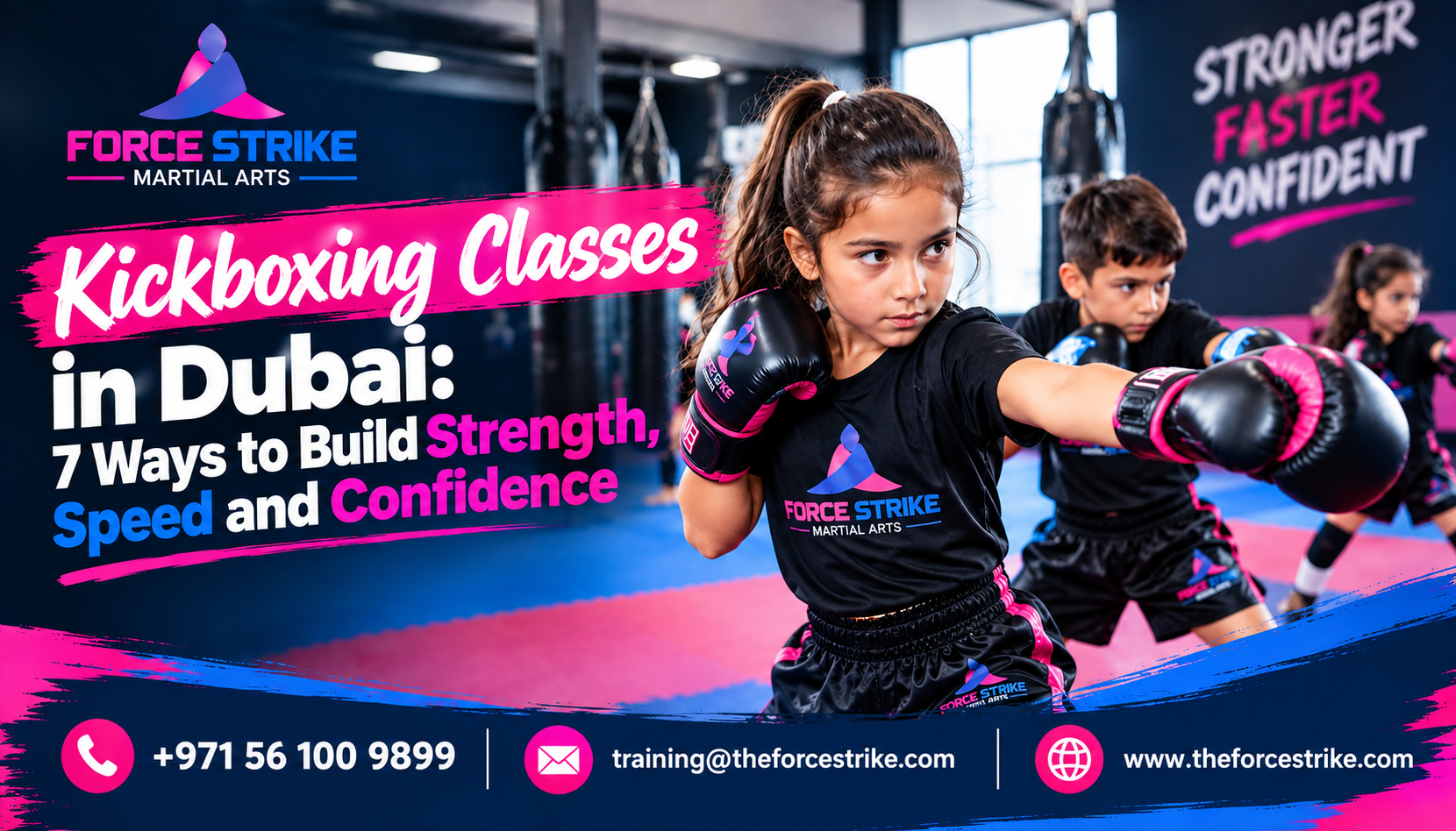
Martial Arts Dubai training is one of the most complete fitness formats available. Boxing, Muay Thai, kickboxing, MMA, and BJJ all develop cardiovascular endurance, muscular strength, coordination, and mental focus at the same time. The skill-based structure means progression never really plateaus — there's always a technique to refine, a combination that isn't quite clean yet.
For people who've cycled through gym memberships without long-term consistency, martial arts tends to solve the dropout problem. The learning curve creates engagement that pure fitness formats just can't replicate. Good for all-round fitness, self-defence capability, stress management, and anyone who needs the skill dimension to stay motivated.
Structured group classes built around compound movements — squats, deadlifts, presses, carries — designed to build real-world strength rather than isolated muscle. Better than solo gym sessions for most people because the programming is done for you and the group dynamic creates accountability that a solo session doesn't. If strength and body composition are the primary goals, this is the most direct route.
High cardiovascular demand, coordination development, strong community element. Boxing fitness classes in Dubai are among the most effective calorie-burning formats available and work equally well for fat loss and stress relief. The striking technique gives sessions structure beyond a standard cardio workout — which is why people tend to keep showing up in a way that spin or treadmill sessions don't produce.
Self defense classes Dubai gyms offer range from basic situational awareness and striking to structured programmes covering grappling, escape techniques, and real-world confrontation management. Often overlooked as a fitness option, but the conditioning required for serious self-defence training is substantial. Practical capability and physical confidence tend to develop together here.
The first question most people have is where to start, and the honest answer is: with your goal, not with a gym.
Identify what you actually want from training — strength, fat loss, stress relief, skill development, self-defence. Each points toward a different format. Trying to cover all of them at once usually means making real progress in none. One clear goal narrows the decision considerably.
You don't need to be fit to start. Every format here has beginner-appropriate entry points. Martial arts classes, boxing fitness, functional strength training — all of them accept complete beginners and scale accordingly. The idea that you need to get fit before starting fitness training is one of the more counterproductive myths in the industry.
Watch a class before joining anywhere. One real session tells you more about coaching quality, environment, and whether a format suits you than any amount of online research. Most gyms in Dubai offer free or discounted trial sessions. Use them — there's no good reason not to.
For a first session, bring comfortable athletic clothing, water, and basic footwear. For boxing or martial arts trials, most gyms provide gloves and hand wraps. Buy your own equipment once you've confirmed you're staying. No need to spend on gear before you know it's the right fit.
On results: fitness improvements — endurance, energy, body composition — typically show within four to six weeks of consistent attendance. Strength gains follow a similar timeline. Mental benefits — reduced stress, improved focus, quieter confidence — often appear within two or three weeks, which surprises most people.
Monthly memberships: AED 350 to AED 900 depending on the format and facility. Specialist martial arts and boxing gyms typically sit in the AED 450 to AED 750 range. Premium multi-discipline facilities in central Dubai push higher. Community gyms in areas like Arjan, Al Barsha, and Mirdif often offer strong coaching at lower price points.
Drop-in sessions: AED 80 to AED 150 per class where available. Useful for trying multiple formats before committing.
Personal training: AED 150 to AED 400 per session. Useful for specific goals or injury rehabilitation alongside group classes.
Starter equipment: For boxing or martial arts, budget AED 200 to AED 500 for gloves, hand wraps, and appropriate clothing. Most gyms advise on what's needed at each stage — no reason to spend heavily before confirming you're committed.
Family packages: Available at many gyms covering multiple disciplines. Worth asking about if more than one family member is training.
The physical transformation that actually holds is the obvious one. Consistent training builds a baseline — body composition, cardiovascular capacity, muscular endurance — that persists in a way that crash-diet fitness approaches don't. It compounds quietly over months rather than arriving dramatically then fading.
Stress management is where a lot of Dubai residents find the most immediate value. Formats that demand full mental presence — boxing, kickboxing, martial arts specifically — push daily stress out of the session entirely. You genuinely can't think about a difficult client while running combinations correctly. For people in high-pressure professional environments, that enforced mental break has practical daily value that's hard to replicate through other means.
Confidence built on real capability is different from the kind that comes from being told you're doing well. People who train consistently carry themselves differently. It's grounded in something — physical capability, mental resilience, the experience of being regularly challenged and coming through it.
Self-defence awareness develops even in fitness-focused boxing and kickboxing classes, not just in dedicated self defense classes Dubai gyms run. The understanding of distance, positioning, and how to manage physical confrontation that develops through consistent striking training is real and practically applicable.
Community is the benefit that gets mentioned least in fitness marketing and experienced most by people who actually train. Group formats — particularly martial arts and combat sports — build genuine social connection through shared challenges. In a transient city where many residents arrive without established networks, that matters more than it might elsewhere.
The honest answer is that the hierarchy shifts depending on the goal.
Pure strength building — functional strength classes or barbell-based programmes outperform everything else here. Martial arts training adds functional strength but isn't the most direct route if pure strength is the priority.
Fat loss and cardiovascular fitness — boxing, kickboxing, and HIIT-based fitness classes sit at the top. High calorie burn, engaging format, better long-term adherence than pure cardio.
All-round development — martial arts training wins. Strength, cardiovascular fitness, coordination, flexibility, mental focus, and self-defence capability all develop simultaneously. The trade-off is a higher initial learning curve.
Stress relief and mental wellbeing — formats that demand full mental presence outperform those that don't. Boxing and martial arts beat running on a treadmill for stress relief specifically because the focus required during training doesn't leave mental space for work problems.
Long-term consistency — skill-based formats consistently outperform generic gym training for retention. There's always something to improve, which keeps engagement sustained in a way that repetitive formats don't.
Choosing the wrong format for the actual goal is the most common one. People pick based on what's trendy or what a friend does rather than what serves their specific objective. A format mismatch produces effort without the right results, which eventually kills motivation — and leaves people concluding fitness "doesn't work for them" when really the format just wasn't right.
Not using trial sessions. The vast majority of fitness classes in Dubai offer free or discounted trials. Committing based on marketing materials or Instagram posts instead is the single most avoidable decision people make.
Overtraining in month one. Enthusiasm pushes people to train five or six days a week early on. The accumulated soreness convinces many to quit before the training has had time to do anything. Two to three sessions a week is right for most people and most formats at the start.
Prioritising price over coaching. Cheaper isn't always worse, but consistently choosing cost over coaching quality builds bad habits early. Those habits cost more to fix than the membership discount saved.
Expecting visible results in two weeks. Meaningful transformation takes six to twelve weeks of consistent training. Most people who quit early do so between weeks three and six — right before the compound effects become clearly visible. The timing is unfortunate and almost always avoidable.
Pick one goal. Not "get fit and lose weight and build muscle and learn self-defence." One primary goal, and choose the format that serves it most directly. Everything else — scheduling, pricing, community — gets evaluated within that choice.
Get to a trial class within the week of deciding. The longer the gap between deciding to start and actually going, the less likely it is to happen. Most facilities in Dubai can accommodate a trial session within a day or two of enquiry.
Tell the coach it's your first session. Good coaches use that information. A first session with context produces better teaching and a better experience than one where the coach is guessing your level.
Commit to three months before evaluating. That's the minimum timeline for an honest assessment of whether a format is working. Physical changes, technique development, and the mental adaptation to a new training routine all require at least that long to show clearly.
Skill-based fitness continues to grow fastest. Boxing, kickboxing, martial arts, and programmes that build practical capability alongside conditioning are consistently outperforming pure fitness formats for member retention. The trend is clear across Dubai's gym landscape.
Hybrid programmes combining strength work with martial arts or boxing conditioning are becoming mainstream. The recognition that no single format covers everything has pushed gyms toward offering more integrated programming.
Women's training options have expanded significantly across the city. Most serious facilities now run dedicated women's sessions or women-only class tracks as standard.
Recovery infrastructure is becoming a differentiator. Mobility work, sports nutrition guidance, and recovery sessions built into the programme — not sold as premium add-ons — are increasingly what residents look for when choosing between comparable options.
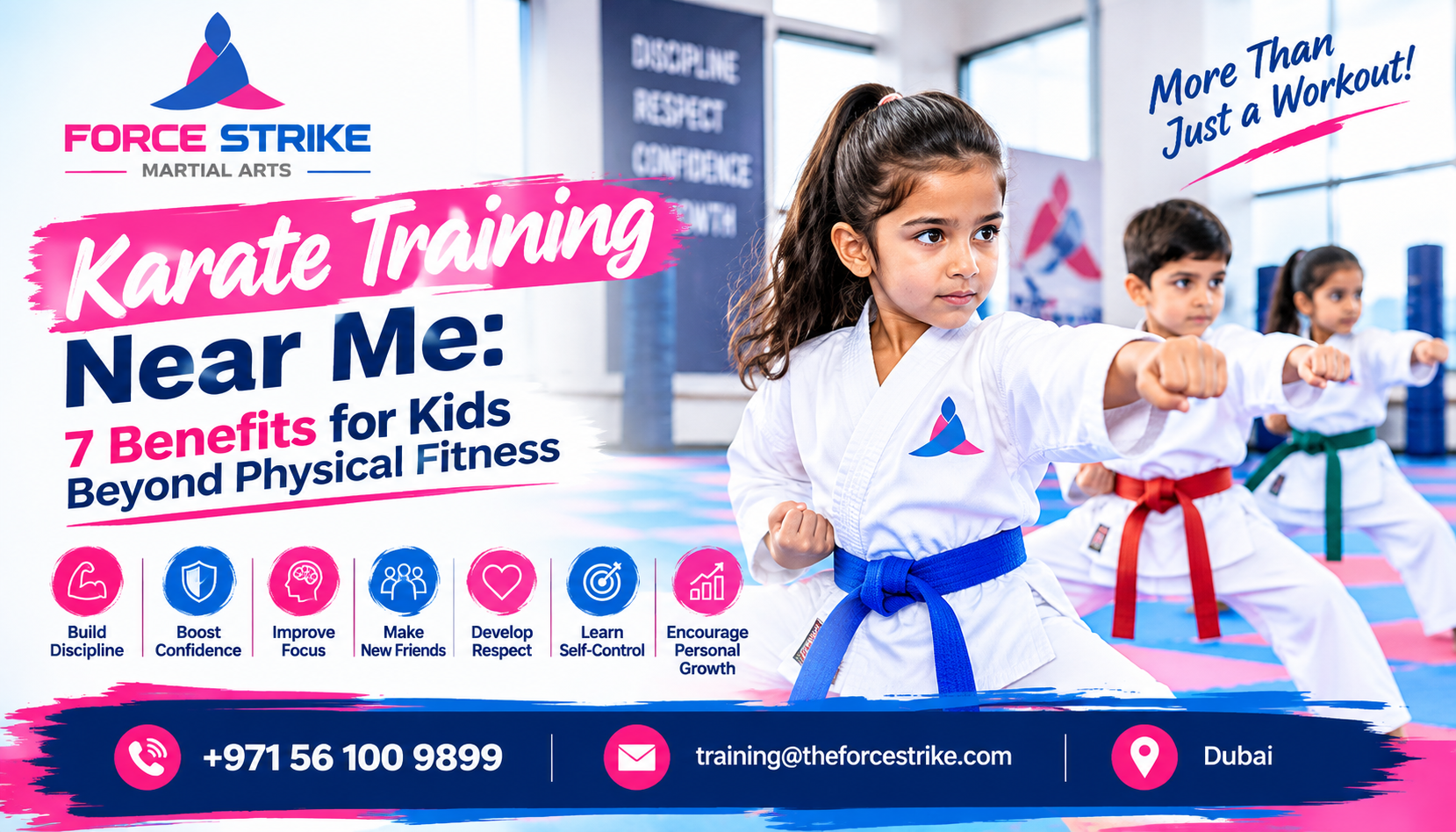
Youth and family programmes are growing rapidly. Parents choosing skill-based fitness for children — kids martial arts, junior boxing, kickboxing for kids — are driving investment in proper junior coaching infrastructure across Dubai's fitness facilities.
Training strength and fitness in Dubai properly — with a format that matches your goal, coaching that builds real technique, and a community that sustains consistency — produces results that outlast the initial motivation. The city has the infrastructure to deliver this across multiple formats and price points.
The decision comes down to knowing what you're actually after and finding the format that serves it. Everything else follows from there.
If you're ready to start, the most practical next step is to identify your primary goal, shortlist two or three fitness classes in Dubai that serve it, and book trial sessions this week. One hour in the right environment tells you more than any research. Find your format, commit to three months, and let the training do what it does.
What is the best way to start strength and fitness training in Dubai?
Start by choosing one main goal, such as building strength, losing weight, improving fitness, or learning self-defence. Then book a trial class at a gym or martial arts academy that matches that goal.
Do I need to be fit before joining boxing or martial arts classes?
No. Most beginner classes are designed for people with little or no fitness background. Coaches usually adjust the intensity and help you build stamina gradually.
How many strength and fitness sessions should beginners attend each week?
For most beginners, two to three sessions per week is a good starting point. It gives your body enough time to recover while helping you build consistency.
How much do fitness classes cost in Dubai?
Monthly memberships usually range from AED 350 to AED 900, depending on the gym, location, facilities, and type of training. Trial classes and drop-in sessions may also be available.
Is boxing or kickboxing good for strength and weight loss?
Yes. Boxing and kickboxing improve cardio, endurance, coordination, and calorie burn. They also build functional strength through regular drills, bag work, bodyweight exercises, and movement training.
What should I check before joining a fitness class in Dubai?
Look at the coach’s experience, class size, cleanliness of the facility, beginner support, schedule flexibility, and whether the training style suits your goal. A trial class is usually the best way to decide.