


Searches for "kickboxing classes near me" bring up gyms, boutique fitness studios, martial arts academies, as well as at least one yoga studio that added a Friday evening class at some point. They all have the same word. Not everyone is teaching the same thing.
As a martial art, boxing doesn't just teach the skills of punching a bag for 45 minutes, but it teaches techniques such as stance, guard, footwork, and how to defend yourself while punching. You can call both of those kickboxing. Only one of them will make you good at it.
If you're a parent who's wondering if a kids' kickboxing class is really a form of training or a way to get a 1-hour workout, or you've been studying karate before, here's the difference you should grasp before paying for a training term.
Short answer: real kick boxing training works on how to stand, how to guard, how to strike, how to move your feet, with a coach who corrects your form, and eventually, light sparring. Cardio kickboxing is a fitness exercise that does not involve the technical instruction that goes as part of the Kickboxing lessons. Both are incorrect, but one teaches the sport!
You can usually tell which one you're looking at within the first five minutes of watching a class.
Is the coach walking around correcting individual stance and hand position, or standing at the front leading everyone through the same combination on repeat? Are beginners doing anything different from the advanced students, or is everyone just moving faster or slower to the same routine? Is there any pad work where a coach holds pads and reacts to what a student throws, or is it entirely shadowboxing and bag work?
If it's mostly the second option in each pair, you're in a cardio class. That's fine if cardio is what you came for. It's a problem if you thought you were learning to fight.
Cardio kickboxing dubai exists because it's a genuinely effective workout — high intensity, low equipment barrier, easy to run for large groups. Gyms like it because one instructor can run a class of thirty people with a speaker and a playlist. Nothing dishonest about that on its own.
The problem starts when a gym markets that class using the same language as technical striking instruction, and someone signs up expecting to learn to fight and instead gets a very good cardio session. Or the reverse happens — someone wants a workout, joins a technical class, and gets frustrated being stopped every ninety seconds to fix their guard.
Both are legitimate products. They're just not interchangeable, and most websites don't make the distinction obvious.
Stance and guard come first, always, before a single punch gets thrown with any real intent behind it. That's not a formality — how you stand determines your balance, your power, and how exposed you are to a counter, so a coach who skips it is skipping the foundation everything else sits on.
From there: jab, cross, hooks, and basic kicks, taught individually before they're strung into combinations. Footwork gets separate attention too, because managing distance is arguably more important to kickboxing than the punches themselves — a technically sound striker who can't move is still an easy target.
Pad work usually enters once the basics hold up under some pressure. This is where a coach can correct technique in something closer to real conditions than shadowboxing allows, because a pad reacts and a bag doesn't. Sparring, when beginners get to it at all, tends to be light and closely supervised. Nobody seriously throws a new student into hard contact in their first month.
Karate and kickboxing look related from the outside and feel different the moment you're actually training. Both are striking disciplines built around stance, repetition, and structured progression, so the underlying discipline transfers reasonably well.
The mechanics don't. Karate technique tends to live inside set forms and a fairly fixed stance. Kickboxing is looser and faster — more mobile guard, combinations thrown in quicker succession, footwork that owes more to boxing than to traditional forms. A karate student walking into their first kickboxing class often finds the structure comfortable and the actual movement genuinely unfamiliar. That's expected, not a sign you're behind.
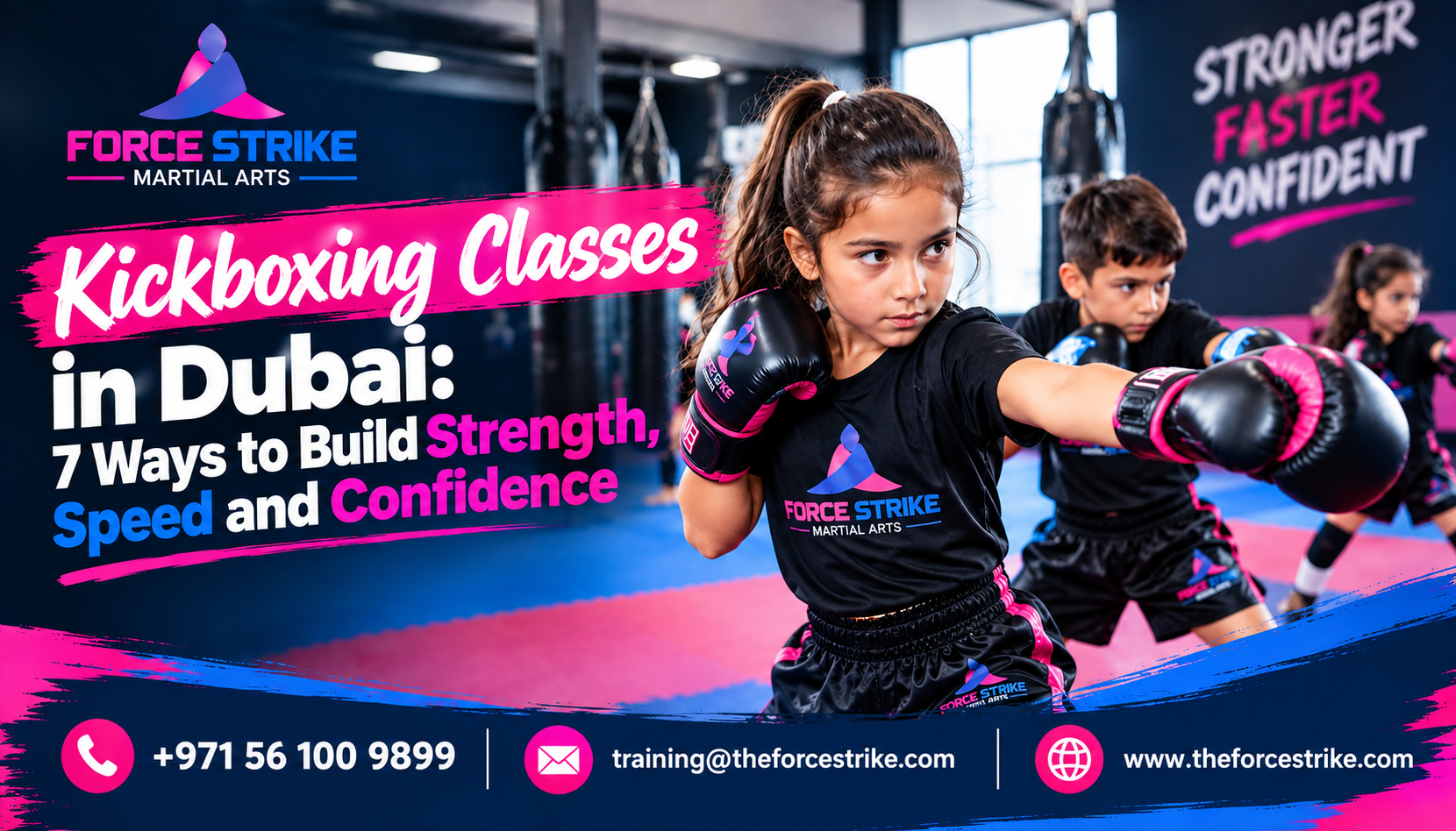
Do not judge a children's kickboxing class by what happens in the adult session next door. A properly run kids' programme spends far more time on coordination, discipline, and controlled movement, and full-contact sparring generally has no place in it at all. Whatever contact exists — if it exists for that age group — should be light, controlled, and directly supervised.
What actually separates a good kids' class from a mediocre one: whether the coach has real experience teaching children rather than just running a scaled-down adult session, how tightly age groups are managed, what the class size looks like, and whether contact rules are explicit rather than left to the coach's mood on the day. Ask about all four before you enrol. No physical activity for kids comes risk-free — football, gymnastics, playground time, none of it does — but a well-structured class manages that risk visibly. You should be able to see it, not just be told about it.
|
Factor |
Cardio Kickboxing |
Technical Kickboxing |
|
Main goal |
Fitness, calorie burn |
Skill development, striking technique |
|
Individual correction |
Rare |
Regular, from a coach |
|
Structure |
Choreographed combinations, music-led |
Stance → technique → pads → sparring |
|
Contact |
Usually none |
Light sparring introduced later |
|
Right for |
Someone who wants a workout |
Someone who wants to learn the sport |
Skip the website copy and ask these directly.
What does a beginner actually do in their first month — not the brochure version, the real one? Does the coach correct individual technique, or run the room through the same drill together? What's the realistic class size, since a coach with thirty students can't give the attention a coach with ten can? And is a trial class available before you commit to a package?
An academy that answers all four without hedging is worth taking seriously. One that dodges two of them probably knows the honest answer isn't a great marketing copy.
Arjan, Al Barsha, JVC, Business Bay, Dubai Marina — kickboxing classes in dubai are everywhere across the city, and volume makes the cardio-versus-technical confusion worse, not better. More gyms means more marketing pages using the word "kickboxing" loosely, and it's genuinely easy to sign a term-long package before realising the class isn't what you assumed.
Forcestrike Martial Arts runs kickboxing training in this part of Dubai alongside its other martial arts programmes. The advice here isn't specific to one academy, though: watch an actual class, or better, try one, before committing to anything. Forty-five minutes on the mat will tell you more than any pricing page.
Nobody looks sharp a month in. Early progress is technical — getting comfortable with stance, throwing basic strikes without losing balance, adjusting to a kind of conditioning that's specific to striking sports and doesn't map neatly onto general gym fitness. Feeling clumsy with footwork and guard position early on is normal, not a sign this isn't for you.
What actually predicts progress isn't athleticism. It's whether someone shows up twice a week and pays attention to the corrections a coach is giving them. That beats training five days a week on autopilot.
If a hard workout is genuinely the goal, cardio kickboxing does that job well and there's no reason to overthink it. If you want to actually learn to strike — because you're crossing over from karate, or because you want your child building real skill rather than just burning energy — the class needs to be teaching technique, not just running combinations at speed.
You won't find that answer on a website. You'll find it by watching, or trying, a class yourself.
If you're near Arjan and want kickboxing training that actually teaches the sport, for yourself or your child, Forcestrike Martial Arts runs kickboxing classes alongside its other martial arts programmes. Get in touch to ask about a trial class and see how a session is actually structured before committing to anything.
What's the actual difference between kickboxing and cardio kickboxing?
Cardio kickboxing is an exercise class that focuses on calorie burning, typically without a lot of personal instruction. Technical kick boxing is the learning of striking, footwork and defence and a coach is actively involved in implementing corrections and progressing to pad work and sparring.
Can a complete beginner join a kickboxing class?
Yes. Whether it is a technical programme, most of them are designed for the persons who have no experience on striking, and in the initial learning, it starts with the stance and guarding.
What age can kids realistically start kickboxing?
It varies from academy to academy, but many provide children's kick boxing in a safe and age appropriate environment with minimal contact for the younger children. Check with the academy you are interested in.
Is kickboxing actually safe for kids?
No contact sport guarantees zero risk. A well-run children's class limits contact, supervises closely, and uses coaches specifically experienced with kids — ask how an academy handles this before enrolling.
Kickboxing or karate — which is better for a beginner?
Neither is objectively better. Karate tends to emphasise forms and a fixed stance; kickboxing leans on mobility and faster combinations. Someone with a karate background usually finds the structure familiar even if the technique takes adjustment.